515 Keisler Dr # 204, Cary, NC 27518
Why Dry Mouth Is a Serious Concern for Your Oral Health



Why Dry Mouth Is a Serious Concern for Your Oral Health
By Legacy Dental
Dry mouth, also known as xerostomia, is more than just a simple inconvenience. It’s a problem that affects many people in Cary, NC, and it could be silently compromising your oral health. When you don’t have enough saliva, your mouth can feel dry, sticky, and uncomfortable, which leads to a variety of oral health issues. If you’re struggling with dry mouth, you’re not alone. This blog explains why dry mouth is a serious concern for your dental health and what you can do about it. By understanding the causes and effects, you can take control of your oral health and avoid long-term damage.
What Is Dry Mouth and How Does It Happen?
Dry mouth occurs when the salivary glands in your mouth don’t produce enough saliva. Saliva is essential for keeping your mouth moist, neutralizing acids, and helping you swallow food. When your saliva flow decreases, the balance in your mouth is disrupted. You might notice symptoms such as a dry, sticky feeling in your mouth, difficulty swallowing, or bad breath.
There are several common causes of dry mouth, such as:
- Medications: Many prescription and over-the-counter drugs, like antihistamines, decongestants, and blood pressure medications, can cause dry mouth as a side effect.
- Aging: As you age, your saliva production naturally declines. This can lead to dry mouth, especially if you’re taking medications that contribute to the issue.
- Health Conditions: Certain medical conditions, such as diabetes, autoimmune diseases (e.g., Sjögren’s syndrome), and cancer treatments (e.g., radiation therapy), can also reduce saliva production.
- Dehydration: Not drinking enough water, especially in the hot summer months here in Cary, NC, can leave your mouth feeling dry and uncomfortable.
Understanding what causes dry mouth can help you take the necessary steps to manage it before it leads to more severe oral health issues. If you’re in Cary, visiting a trusted dentist Cary can help identify the underlying causes and guide you on the best solutions to maintain your oral health.
The Risks of Dry Mouth for Your Oral Health
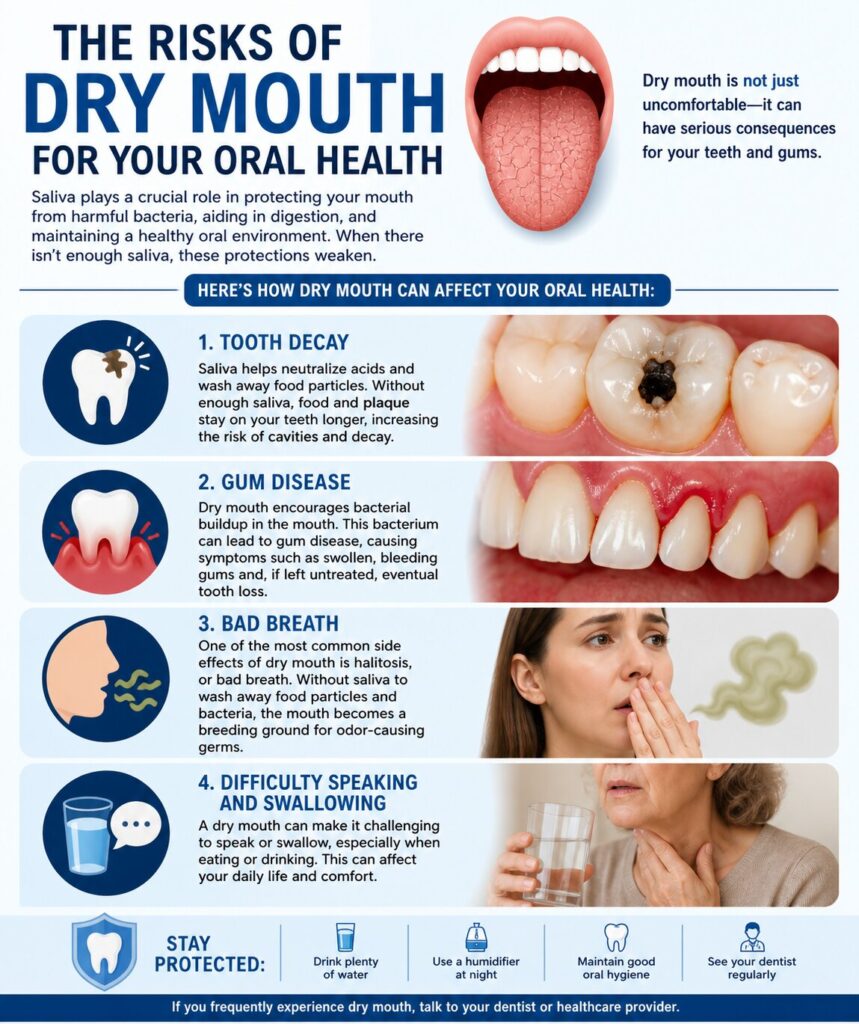
Dry mouth is not just uncomfortable—it can have serious consequences for your teeth and gums. Saliva plays a crucial role in protecting your mouth from harmful bacteria, aiding in digestion, and maintaining a healthy oral environment. When there isn’t enough saliva, these protections weaken. Here’s how dry mouth can affect your oral health:
- Tooth Decay: Saliva helps neutralize acids and wash away food particles. Without enough saliva, food and plaque stay on your teeth longer, increasing the risk of cavities and decay.
- Gum Disease: Dry mouth encourages bacterial buildup in the mouth. This bacterium can lead to gum disease, causing symptoms such as swollen, bleeding gums and, if left untreated, eventual tooth loss.
- Bad Breath: One of the most common side effects of dry mouth is halitosis, or bad breath. Without saliva to wash away food particles and bacteria, the mouth becomes a breeding ground for odor-causing germs.
- Difficulty Speaking and Swallowing: A dry mouth can make it challenging to speak or swallow, especially when eating or drinking. This can affect your daily life and comfort.
How to Prevent and Manage Dry Mouth
There are several effective ways to manage dry mouth and maintain your oral health. Here’s what you can do:
- Drink Plenty of Water: Staying hydrated is one of the easiest and most effective ways to manage dry mouth. Drink water throughout the day to keep your mouth moist.
- Chew Sugar-Free Gum: Chewing gum stimulates saliva production. Opt for sugar-free gum to avoid contributing to tooth decay while still keeping your mouth moist.
- Use a Humidifier: If your home is dry, especially in the winter, consider using a humidifier while you sleep. This can help keep your mouth moist during the night.
- Avoid Alcohol and Caffeine: Both alcohol and caffeine can dehydrate you, making dry mouth worse. Choose water or herbal tea to stay hydrated and prevent dryness.
- Breathing Through Your Nose: If you tend to breathe through your mouth, especially while sleeping, try to breathe through your nose instead. This can help reduce dry mouth, especially during sleep.
When to See a Dentist in Cary
If your dry mouth persists despite trying home remedies, it’s important to consult with a Dentist Cary. A dentist can help determine the underlying cause of your dry mouth, whether it’s medication, a health condition, or something else. They can also recommend treatments, such as saliva substitutes or special medications, to help increase saliva production.
Ignoring dry mouth can lead to more serious oral health issues, such as cavities, gum disease, and infections. Don’t wait until it’s too late—get the help you need today.
Conclusion: Protect Your Oral Health with Proper Care
Dry mouth is more than just a minor inconvenience—it’s a condition that can affect your overall oral health. Without proper saliva production, your teeth and gums are at risk of decay, gum disease, and bad breath. By staying hydrated, using saliva-stimulating products like sugar-free gum, and seeking help from a dentist, you can manage dry mouth and protect your smile.
If you’re dealing with dry mouth or other oral health concerns, schedule an appointment with Legacy Dental Cary – Timothy S Barlow, DDS, PA & Chad Pastoor, DDS, PA. Our team is here to help you maintain healthy teeth and gums for a lifetime. Don’t let dry mouth hold you back—take control of your oral health today.
Common Questions People Ask
What causes dry mouth?
Dry mouth can be caused by medications, aging, dehydration, or health conditions like diabetes. It occurs when there isn’t enough saliva to keep your mouth moist.
Can dry mouth lead to tooth decay?
Yes, without enough saliva, food particles and acids stay on your teeth longer, increasing the risk of cavities and decay.
How can I relieve dry mouth?
Drink plenty of water, chew sugar-free gum, and use a humidifier to keep your mouth moist. Avoid caffeine and alcohol, which can worsen dry mouth.
Is dry mouth a common condition in older adults?
Yes, dry mouth is more common in older adults due to reduced saliva production and the medications they often take.
What should I do if dry mouth persists?
If dry mouth persists, visit a dentist to identify the underlying cause and explore treatment options, such as saliva substitutes or medications.